

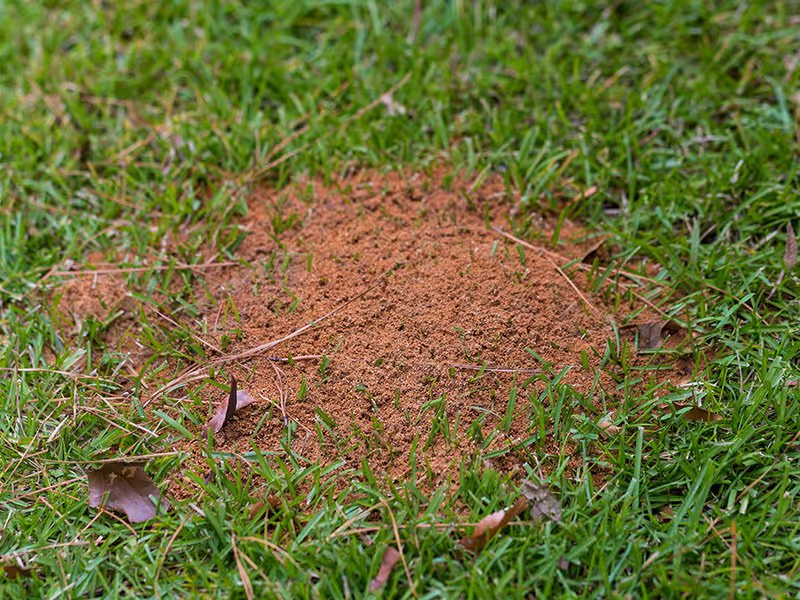
What Fire Ants Are and Why They're All Over Georgia
The fire ants in Metro Atlanta are red imported fire ants. They're an invasive species that came from South America back in the 1930s and have spread across the Southeast ever since.
They're small — only about 1/8 to 1/4 inch long — but they're aggressive. Disturb a mound, even by accident, and hundreds of them come out fast.
They don't just bite. They sting, injecting venom that causes burning pain and raised welts that can last for days.
A single colony can have 100,000 to 500,000 workers. And a single yard can host several colonies at the same time. In the neighborhoods we service across Metro Atlanta, it's pretty common to see multiple mounds scattered across a single property.
If you're already seeing mounds, they've been building underground for weeks.
got lawn? Tree & Turf Care provides 12-month fire ant control that covers your entire yard — not just the mounds you can see. Call (470) 785-8855 or request a quote online.
Why Atlanta Yards Are Perfect for Fire Ants
Metro Atlanta has almost everything fire ants need to thrive. Warm temperatures, long summers, and plenty of moisture.
Fire ants like open, sunny areas — the same parts of the yard where your kids play, your dog hangs out, and you spend time on the weekends.
You'll usually find mounds in these spots:
- In the middle of the lawn, especially where it gets full sun
- Along sidewalks, driveways, and patios — pavement holds heat, and fire ants love it
- Around landscape beds and mulched areas near the house
- Close to irrigation heads and low spots where water collects after rain
- Along fence lines and property edges
Georgia's clay-heavy soil plays a role, too. Clay holds moisture, and fire ants use that to build and maintain their underground tunnels.
After a spring or summer rainstorm, fresh mounds can show up across the yard in a matter of hours. That's the colony pushing soil up to the surface.
If you've lived in Johns Creek, or anywhere in North Metro for a while, none of this is surprising. But knowing where fire ants build is one thing. Getting rid of them is another story.
When Fire Ants Are Most Active in Atlanta
Fire ants are technically active year-round in Georgia. But the worst months are spring and fall — specifically May through June and September through October.
That's when temperatures range from 70 to 85 degrees — their sweet spot.
In spring, colonies grow fast. Queens are laying eggs, new mounds appear almost overnight, and foraging activity is at its peak.
This is the window when a small fire ant problem can turn into a big one if nothing is done.
During the hottest summer months, fire ants tend to go deeper underground and forage more at night.
You might see fewer mounds on the surface, but the colonies are still very much alive below ground.
Spring is the best time to get ahead of fire ants before populations explode.
got lawn? has been treating Metro Atlanta lawns since 2008, and we see the same pattern every year. In most cases, a single annual application keeps lawns protected for a full year.
Why Fire Ant Stings Are a Real Safety Concern
Fire ants aren't just annoying. They're dangerous in a way a lot of homeowners don't take seriously until someone gets stung.
They Sting in Groups
When you step on or near a mound, fire ants don't come one at a time. They swarm. Each ant can sting multiple times.
A single encounter can leave you with dozens of stings before you can get away.
Kids and Pets Are Especially at Risk
Children playing in the yard might not notice a mound in the grass. Dogs and cats can stumble into one while running around the backyard.
Because kids and pets are smaller, even a handful of stings can be more serious for them.
Some People Also Have Severe Reactions
Most fire ant stings cause pain, swelling, and small pustules that heal within a week. But for some people, fire ant venom can trigger anaphylaxis — a serious allergic reaction that needs immediate medical attention.
If anyone in your household has known insect sting allergies, fire ants near the home are a genuine safety issue.
Large Mounds Can Also Damage the Lawn Itself
Some mounds stretch 18 inches across, smothering the grass underneath. The tunneling below the surface disrupts root systems and can leave parts of the yard uneven and patchy.
Why Store-Bought Products Don't Fix a Fire Ant Problem
Most homeowners try the hardware store route at least once. Mound drenches, granular baits, contact sprays — they seem like they should work.
But here's the problem.
You're usually only treating the mounds you can see.
If your yard has visible mounds, there are often additional colonies underground that haven't surfaced yet. Treating one mound doesn't affect the others developing elsewhere in the yard.
Fire Ant Colonies Relocate
Disturb a mound without fully eliminating the queen, and the colony simply moves. Many homeowners see a new mound appear a few feet away within days.
Most describe it as a never-ending game of whack-a-mole.
Timing Matters
Baits only work when fire ants are actively foraging, and the bait has to remain intact long enough for worker ants to carry it back to the colony. Heavy rain or poor timing can make treatments far less effective.
Spot-Treating Doesn't Solve a Yard-Wide Infestation
Without a broadcast treatment across the property, new colonies continue establishing themselves. One mound disappears, another shows up somewhere else.
This is why we see so many homeowners across Roswell, Marietta, and Buckhead come to us after months of fighting fire ants on their own.
The products aren't bad — they're just not designed to handle the scale of the problem.
How got lawn?'s Fire Ant Control Works
At got lawn? Tree & Turf Care, we don't chase individual mounds. We treat the whole yard.
Here's what our fire ant control service includes:
- A full property inspection to identify active colonies and likely problem areas
- Broadcast treatment across the lawn and landscape beds
- Treatment that targets both active colonies and developing colonies
- 12 months of protection from a single annual application
- Free re-treatment if fire ants return during the protection period
We know what fire ant season looks like in this area — when activity spikes, where colonies tend to build, and what it takes to keep them from coming back.
That local experience matters.
Fire Ant FAQ for Metro Atlanta Homeowners
How do I know if I have fire ants?
Look for dome-shaped mounds of loose, fine soil in open, sunny areas of your yard. They often appear after rain.
If you disturb the mound and see reddish-brown ants swarming aggressively, those are likely fire ants.
Are fire ants active during winter in Georgia?
Yes.
Fire ants stay active year-round in Georgia. During winter they move deeper underground and become less visible, but the colonies survive and return closer to the surface once soil temperatures warm in late winter and early spring.
Why are fire ants worse after rain?
Heavy rain forces fire ants to rebuild damaged tunnels and move soil upward, which is why fresh mounds suddenly appear across the lawn after storms. Metro Atlanta’s clay-heavy soil also holds moisture longer, creating ideal conditions for colonies.
Can fire ants get into the house?
Fire ants usually prefer outdoor areas, but during heavy rain, drought, or extreme heat, they sometimes move closer to foundations and can enter through small gaps around doors, plumbing, or utility lines.
Can you mow over fire ant mounds?
You can, but it usually doesn’t end well. Lawn mowers disturb the colony, causing worker ants to swarm aggressively. Many homeowners get stung while mowing without realizing a mound is nearby.
Stop Fighting Fire Ants on Your Own
Fire ants don't go away by themselves. And the longer they stay active, the more colonies can spread across the yard.
got lawn? Tree & Turf Care has been helping Metro Atlanta homeowners protect their lawns since 2008.
Our fire ant control program provides 12 months of protection with a single annual application.
Call (470) 785-8855 or contact us online to schedule your fire ant treatment today.


