

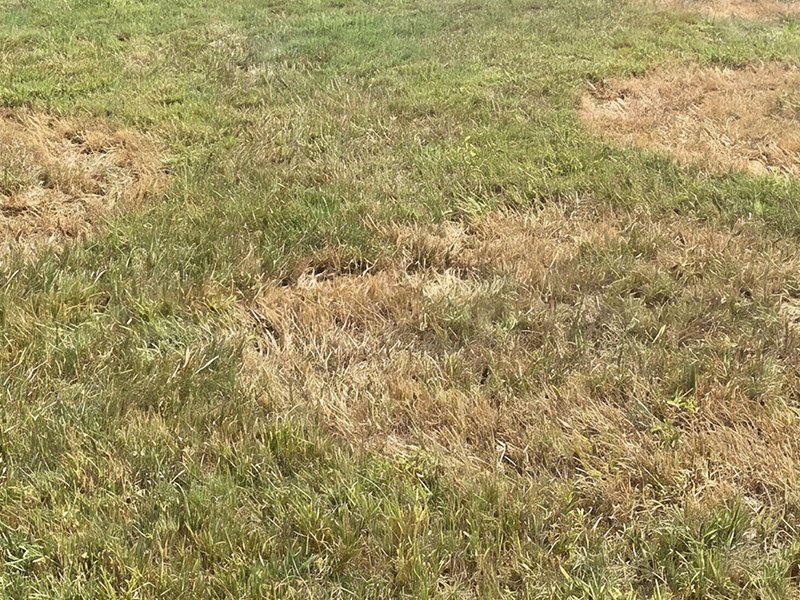
What Is Brown Patch?
Brown patch is a fungal disease caused by Rhizoctonia solani, a soil-borne pathogen that is present in nearly every lawn. It does not need to be introduced — it is already there, waiting for the right conditions to become active.
In Georgia, brown patch primarily affects cool-season grasses, especially tall fescue. This is important to understand: fescue is a cool-season grass growing in a warm-season climate. It is already stressed by Atlanta's summer heat, which makes it more vulnerable to disease than warm-season grasses like Bermuda and Zoysia.
Warm-season grasses can develop a related disease called large patch, which tends to appear in spring and fall rather than midsummer. If you have a Bermuda or Zoysia lawn and notice circular patches in April or October, that is likely a different issue. This article focuses specifically on the summer brown patch that hits fescue lawns hardest.
What Does Summer Brown Patch Look Like?
Brown patch is usually easy to spot once you know what you are looking for.
Circular or irregular brown patches. The most recognizable sign is roughly circular areas of brown, thinning grass. These patches typically start at about one to three feet in diameter but can expand quickly during extended hot, humid conditions. Some patches grow to 10 feet or more if left unchecked.
The smoke ring. In the early morning, before the dew dries, you may notice a thin, dark border around the edge of the patch. This is called a smoke ring, and it is one of the most reliable indicators of an active brown patch. It appears when the fungus is actively growing and will fade as the day warms up.
Leaf lesions. If you pull a few blades of grass from the edge of a brown patch, look closely at the leaves. You will often see tan or light brown lesions with darker brown borders on individual blades. These lesions are where the fungus has infected the leaf tissue.
Thinning rather than dying. In many cases, brown patch kills the leaf blades but not the crowns of the grass plants. This means the lawn can recover—but it takes time, and repeated infections in the same area will significantly weaken the turf.
Why Summer Is Peak Brown Patch Season in Atlanta
Brown patch needs three things to thrive, and Metro Atlanta provides all of them in abundance during summer.
High Temperatures
Brown patch becomes active when daytime temperatures exceed 80 degrees and nighttime temperatures stay above 60 degrees. In Atlanta, those conditions begin in late May and persist through September. The worst outbreaks usually happen during stretches when overnight lows stay in the mid-70s.
These conditions occur almost every summer across North Metro Atlanta, which is why brown patch is one of the most common lawn diseases our team evaluates in June, July, and August.
Prolonged Leaf Wetness
The fungus needs the grass blades to stay wet for extended periods — generally more than 10 hours per day for several consecutive days. Atlanta's summer humidity often keeps lawns damp well into the morning, especially in areas with poor air circulation. Add in afternoon thunderstorms and evening watering, and the leaf wetness period easily exceeds that threshold.
Stressed Turf
Fescue that is already heat-stressed is far more susceptible to brown patch. When nighttime temperatures stay above 70 degrees, fescue cannot properly recover from daytime heat. The grass becomes weakened, and weakened turf has less ability to fight off fungal infections.
This is why brown patch hits fescue lawns so much harder than warm-season grasses. Bermuda and Zoysia are thriving in July heat. Fescue is surviving — and brown patch takes advantage of that vulnerability.
How to Reduce Brown Patch Risk in Your Lawn
You cannot eliminate brown patch entirely — the fungus is always present in the soil, and Atlanta's summer climate will activate it. But you can significantly reduce its severity with the right cultural practices.
Water at the Right Time
One of the most common causes of brown patch is prolonged leaf wetness. Watering in the evening allows grass blades to remain wet overnight, creating ideal conditions for fungal activity.
Water between 4 a.m. and 8 a.m. so the lawn can dry quickly as temperatures rise.
Water Deeply and Less Often
Light, frequent watering keeps the lawn surface damp and encourages disease development.
For fescue, keep total weekly irrigation — including rainfall — to about one inch per week. Deep, infrequent watering encourages healthier roots while allowing the lawn surface to dry between watering cycles.
Avoid Summer Fertilization
Applying nitrogen fertilizer during summer promotes lush, tender growth that is more susceptible to disease during periods of heat and humidity.
Save fertilizer applications for fall and early spring when fescue can use those nutrients more effectively.
Maintain a Taller Mowing Height
Mowing fescue too short during summer increases stress and reduces the lawn's ability to tolerate heat and disease pressure.
Maintain a mowing height of 3.5 to 4 inches during summer and avoid removing more than one-third of the grass blade during any single mowing.
Improve Air Circulation
Brown patch is often worse in areas where air does not move freely — along fences, against buildings, beneath dense tree canopies, and in heavily landscaped areas where humidity lingers.
If certain areas of your lawn experience brown patch year after year, improving airflow by selectively pruning nearby shrubs or overhanging branches may help reduce disease pressure.
Reduce Thatch Buildup
A thick thatch layer traps moisture against the base of the grass and creates favorable conditions for fungal activity.
Core aeration in the fall helps break down thatch, improve drainage, and promote stronger root development heading into the next growing season.
When Professional Treatment Makes Sense
In many Atlanta fescue lawns, brown patch returns year after year in the same areas and worsens. When that happens, professional treatment is often the most effective solution.
At got lawn? Tree & Turf Care, our lawn disease control services are designed to stay ahead of brown patch rather than chasing it after the damage is done.
Preventive fungicide applications are timed to coincide with when brown patch conditions typically develop in Metro Atlanta. By applying fungicide before the disease becomes active, we protect the turf during the most vulnerable window.
Curative treatments are available if brown patch has already taken hold. The goal is to stop the spread and give the grass the best chance to recover.
Our disease control program includes targeted fungicide treatments for both brown patch (fescue lawns) and large patch (Zoysia and Bermuda lawns), so your lawn is covered regardless of grass type.
Brown Patch FAQ for Metro Atlanta Homeowners
Will my lawn recover from brown patch?
In most cases, yes. Brown patch typically kills the leaf blades but not the crown of the grass plant. Once conditions cool down in fall, fescue can regrow. However, severe or repeated infections can thin the lawn significantly, and overseeding in fall may be needed to restore density.
Is brown patch the same as large patch?
They are related — both are caused by Rhizoctonia solani — but they behave differently. Brown patch affects cool-season grasses like fescue and is most active during summer. Large patch affects warm-season grasses like Zoysia and Bermuda and typically appears in spring and fall during transition periods.
Does brown patch spread from lawn to lawn?
Not really. Rhizoctonia solani is already present in virtually every lawn. Brown patch develops when local conditions in your yard — moisture, temperature, and turf health — line up to allow the fungus to become active. Your neighbor's brown patch did not cause yours.
Does shade make brown patch worse?
Yes. Areas that receive less sunlight typically stay damp longer after rainfall, irrigation, or morning dew. Extended leaf wetness is one of the primary factors that allows brown patch to develop and spread, which is why shaded sections of fescue lawns often show symptoms first.
Get Ahead of Brown Patch This Summer
Brown patch can affect any fescue lawn, but healthy turf is generally more resilient than turf that is already stressed.
Proper fertilization, aeration, mowing practices, and overall lawn health all play a role in helping fescue withstand summer stress and recover more quickly when disease pressure develops. That's one reason brown patch often becomes a recurring issue in lawns that are already struggling with thinning turf, poor vigor, or ongoing stress.
At got lawn? Tree & Turf Care, our lawn care programs are designed to promote stronger root systems, healthier turf, and better overall lawn performance throughout the year. While no lawn is completely immune to brown patch, a healthy lawn is typically in a much better position to handle the challenges of an Atlanta summer.
Since 2008, got lawn? Tree & Turf Care has been helping homeowners Acworth, Duluth, Roswell, Smyrna, and across Metro Atlanta build healthier, more resilient lawns.
Contact us today or call (470) 785-8855 to learn more about our lawn care and disease control services.


