

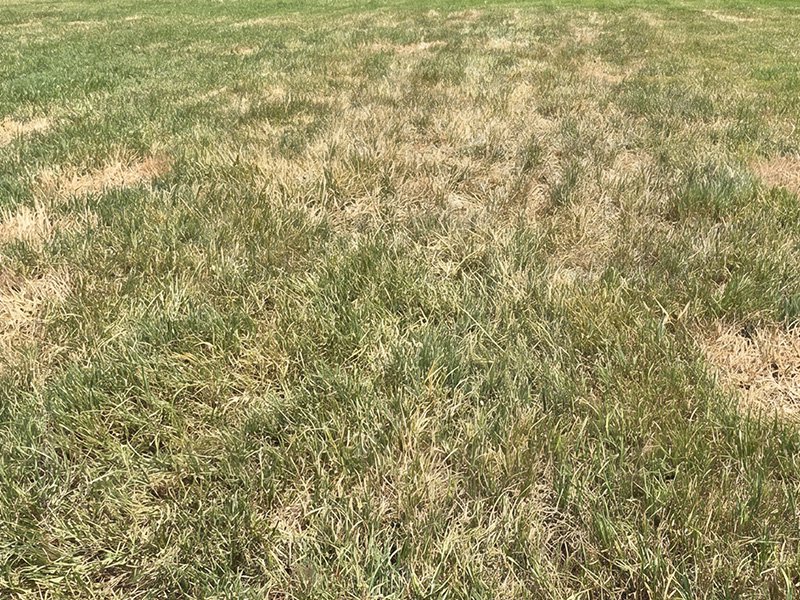
Why Fescue Struggles in Atlanta Summers
To understand why fescue thins out in summer, it helps to understand what the grass is up against.
Warm Nights Make Recovery Difficult
Fescue thrives when days are mild and nights are cool. Unfortunately, Metro Atlanta summers often bring long stretches of warm nights, which makes it difficult for the grass to recover from daytime heat.
When that happens night after night, fescue never gets the recovery time it needs. The grass gradually becomes stressed and begins to thin.
Why Heat Takes Such a Toll on Fescue
Once temperatures climb into the upper 80s and 90s, fescue becomes much less efficient at producing the energy it needs to stay healthy. The grass uses energy faster than it can replenish it, especially when hot days are followed by warm nights.
That is one reason homeowners are often surprised to see fescue decline even when they are watering correctly. During a Metro Atlanta summer, heat itself becomes one of the biggest stressors. Water helps, but it cannot completely overcome weeks of high temperatures and humidity.
This is something we see every summer on fescue lawns throughout Johns Creek, Canton, Woodstock, and surrounding North Metro Atlanta communities. Even well-maintained lawns typically thin somewhat during July and August.
Shallow Root Systems in Summer
Fescue's root system is at its deepest in spring and fall. During summer heat, roots naturally retract and become shallower. This reduces the plant's ability to access water and nutrients deeper in the soil, making it more dependent on surface moisture and more vulnerable to short dry spells.
In Metro Atlanta's clay soil, this is compounded by the fact that compacted clay makes it harder for roots to penetrate deeply in the first place.
What Normal Summer Fescue Stress Looks Like
Knowing what is normal versus what is a bigger problem can save you a lot of worry — and prevent you from doing things that make the situation worse.
Normal summer thinning: Fescue lawns in Atlanta will naturally thin during the hottest months. You may see the lawn become less dense, with individual grass plants spacing out. Some browning is expected, especially in full-sun areas. Shaded sections of the lawn usually hold up better.
Drought stress signs: If fescue is not getting enough water, the blades will start to curl or fold inward. The grass takes on a dull, blue-gray appearance. Footprints will remain visible in the lawn for several minutes instead of springing back. These are signals to water — not to panic.
When it might be something else: If you see circular brown patches with distinct edges, especially with a dark ring around the border, that could be brown patch fungus rather than simple heat stress. Brown patch is the most common disease in Atlanta fescue lawns during summer and requires a different approach.
If you are not sure whether the damage is heat stress or disease, it is worth having a professional take a look. Every summer, we inspect lawns where homeowners assume they need more water, only to find the real problem is brown patch fungus. Adding more water in those situations often makes the disease worse.
What to Do for Your Fescue This Summer
The goal from June through August is simple: keep your fescue alive and as healthy as possible until cooler fall temperatures arrive. This is not the time to push growth or try to make the lawn look perfect. It is time to support survival and set up a strong fall recovery.
Water Consistently — But Do Not Overdo It
Fescue needs about one to one and a half inches of water per week during summer, including rainfall. Water deeply two to three times per week rather than lightly every day.
One of the most common mistakes we see is homeowners watering a little every day because the lawn looks stressed. Unfortunately, frequent shallow watering encourages shallower roots and can create conditions that favor fungal diseases. Deep, consistent watering is far more beneficial than daily sprinkling.
Deep watering encourages whatever root depth fescue can maintain during summer and lets the soil surface dry between sessions.
Water in the early morning — between 4 a.m. and 8 a.m. This gives the grass time to absorb moisture before heat causes evaporation, and the blades dry quickly as the day warms up. Keeping grass blades dry overnight is critical for preventing brown patch and other fungal diseases.
Remember that Georgia's statewide watering schedule requires irrigation to happen between 4 p.m. and 10 a.m. Early morning is both the legally compliant and the most effective option.
Raise Your Mowing Height
This is one of the simplest and most impactful things you can do for fescue in summer.
Raise your mower to 3.5 to 4 inches. Taller grass blades shade the soil surface, which reduces soil temperature and slows moisture loss. Taller grass also means more leaf surface for the grass to use for energy production — even if that production is reduced by heat.
Never remove more than one-third of the grass blade in a single mowing. If you have been mowing at 3 inches and want to raise it to 4, do it gradually over two or three mowings.
Also consider mowing less frequently during the hottest periods. If growth has slowed significantly — which it will — mowing every 10 to 14 days may be sufficient instead of weekly.
Do Not Fertilize
This is critical. Do not apply nitrogen fertilizer to fescue during summer.
Nitrogen pushes new leaf growth, and new growth requires energy that the plant does not have to spare. Forcing growth during heat stress weakens fescue further and makes it more susceptible to disease, particularly brown patch.
Summer is the off-season for nitrogen fertilization on fescue lawns.
At got lawn?, our Healthy Lawn Protection program is designed around the seasonal needs of fescue. The program includes fertilization treatments in early spring, late fall, and winter, along with ongoing weed control throughout the year. In early summer, we apply chelated iron to help maintain color without encouraging the excessive growth that nitrogen fertilizers can produce during hot weather.
Keep Foot Traffic to a Minimum
Fescue that is already stressed by heat and reduced root systems does not recover well from heavy foot traffic. If possible, avoid concentrated activity on fescue areas during the hottest months. This includes things like regularly placing heavy objects in the same spot.
Watch for Disease
Watch for the telltale circular patches with dark borders, especially after rainy or humid stretches. Brown patch often develops when overnight temperatures remain warm and leaf blades stay wet for extended periods.
Because heat stress and brown patch can look similar from a distance, many homeowners struggle to tell the difference. Our lawn technicians regularly evaluate both conditions during summer visits and can recommend the right course of action before significant damage occurs.
got lawn?'s lawn disease control includes preventive fungicide applications timed for summer, which is the most reliable way to keep brown patch from compounding the damage that heat stress is already causing.
Common Mistakes That Make Summer Stress Worse
Do Not Overseed in Summer
New fescue seed needs cool soil temperatures to germinate and establish successfully. Seed planted in June, July, or August will not survive Atlanta's soil temperatures. Wait until mid-September through mid-October for overseeding.
Do Not Apply Herbicides Unnecessarily
Many herbicides add stress to already-weakened fescue. During summer, the priority should be helping the lawn survive heat and humidity rather than introducing additional stress whenever possible.
This is one reason summer weed control can be challenging in fescue lawns. Weed treatments that are effective can sometimes affect already-stressed turf as well. Our technicians evaluate weed pressure, turf health, and weather conditions before making treatment recommendations so problems can be addressed without creating additional stress for the lawn.
Do Not Scalp the Lawn Trying to "Reset" It
Cutting fescue short in summer removes the leaf surface it needs to produce whatever energy it can. It also exposes the soil to more direct heat, raising soil temperatures and worsening stress.
Do Not Give Up and Stop Watering
If fescue goes completely dormant due to summer drought in Atlanta, recovery is much harder — and some areas may not come back at all. Consistent irrigation keeps the crowns alive, even if the lawn does not look great.
Setting Up for Fall Recovery
The good news is that summer stress is usually temporary. Once nighttime temperatures start dropping below 70 degrees — usually by mid-September in Metro Atlanta — fescue's growing conditions improve dramatically.
Many homeowners are surprised by how quickly a stressed fescue lawn can recover once cooler temperatures return. We routinely see lawns that struggled through August begin filling back in during the fall when aeration, overseeding, and proper fertilization are timed correctly.
A strong fall recovery plan often includes:
Core Aeration
Core aeration in early fall opens up compacted clay soil, improves water and nutrient penetration, and gives fescue roots room to expand. This is one of the most effective things you can do for a fescue lawn in Atlanta.
Overseeding
Overseeding in mid-September through mid-October fills in thin or bare areas left by summer stress. Seeding after aeration gives the best seed-to-soil contact and germination rates.
Fall Fertilization
Fall fertilization provides the nutrients fescue needs during its strongest growing period. This is when fescue builds the root system and density that carries it through the following year.
At got lawn?, our full-service lawn care services provide the fertilization, weed control, and seasonal treatments that support fescue throughout the year. Combined with our fall aeration and overseeding services, these treatments help support faster recovery, improved density, and stronger overall turf health.
Fescue Summer Stress FAQ
Is my fescue dead or just dormant?
In most cases, summer-thinned fescue is stressed, not dead. If the lawn has received consistent water through the summer, it will often recover when cooler fall temperatures return.
Should I replace my fescue with Bermuda or zoysia?
That depends on your priorities. Bermuda and zoysia handle Atlanta summers better, while fescue offers year-round green color but requires more attention during hot weather.
Why does my fescue look worse in sunny areas than in shady areas?
This is completely normal. Full-sun areas experience higher soil temperatures and greater moisture loss, so they typically show signs of summer stress before shaded portions of the lawn.
Give Your Fescue the Best Chance This Summer
Summer is tough on fescue in Metro Atlanta, but it does not have to ruin your lawn. The key is understanding what is normal, avoiding common mistakes, and putting the right plan in place for fall recovery.
At got lawn? Tree & Turf Care, we have been helping Metro Atlanta homeowners care for healthier lawns since 2008. Whether you have fescue, Bermuda, zoysia, or another turf type, our lawn care programs are designed around the unique challenges of growing healthy grass in Georgia's climate. For fescue lawns, that includes properly timed fertilization, weed control, lawn disease management, and optional fall aeration and overseeding services.
If your fescue lawn is struggling this summer, now is the time to start planning for a strong recovery. Contact got lawn? today or call (470) 785-8855 to learn how we can help your lawn come back thicker, healthier, and stronger this fall.


