

How Lawn Equipment Can Move Weeds
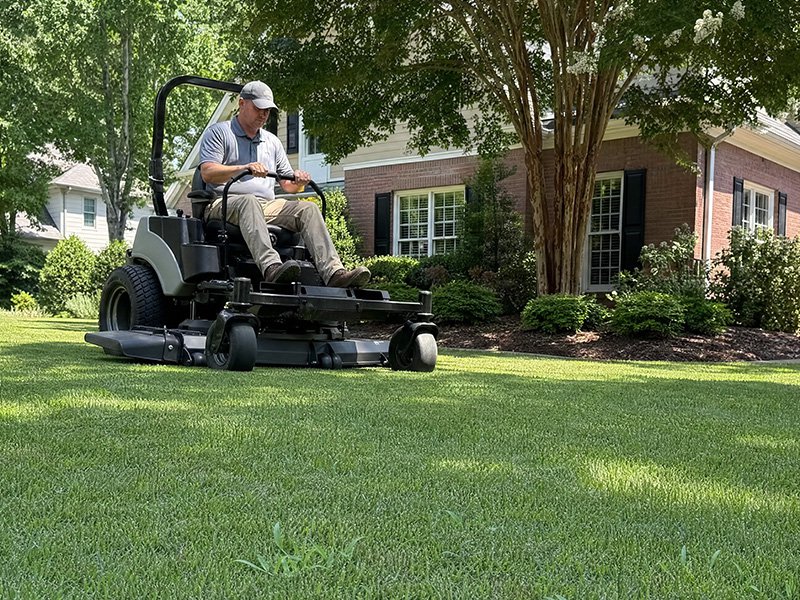
Think about what a commercial mower encounters during a typical day.
It may travel through several lawns, cutting grass and whatever else is growing in them. Grass clippings, soil, seeds, and bits of weeds can collect underneath the mower deck, around the discharge chute, on the tires, and on other equipment.
When that mower moves to the next property, some of that material can come with it. Weed seeds are especially easy to transport when equipment has moved through a lawn where weeds have already gone to seed.
That doesn't necessarily mean those seeds will become a problem.
Getting a Weed Seed Into Your Lawn Is Only Step One
Weed seeds are already everywhere.
They move by wind, animals, people, and soil. Many are also already sitting in the ground, waiting for the right conditions to germinate.
What matters more is whether your lawn gives those weeds an opportunity to grow.
Thick, healthy turf leaves weeds with less room to establish. Thin areas, bare soil, improper mowing, too much or too little water, disease, insect damage, and other stresses can all create openings where weeds can take hold.
That's why two neighboring lawns can be exposed to the same weed seeds and end up looking completely different.
What About Crabgrass?
Crabgrass is a great example.
If crabgrass suddenly seems to be everywhere in August, it's tempting to assume somebody recently brought it into the yard.
But the crabgrass you're seeing now started from seed earlier in the growing season. Crabgrass is a summer annual weed, meaning it germinates, grows, produces seed, and dies within the same growing season.
By late summer, those plants have had months to spread out and become more noticeable. That can make a crabgrass problem look like it appeared almost overnight even though it didn't actually begin in August.
But if crabgrass is taking over large areas of the lawn, we'd look at the bigger picture:
- Was a spring pre-emergent applied at the right time?
- Is the turf thin or struggling?
- Are there bare areas where weeds can establish?
- Is the lawn being mowed correctly for the grass type?
- Is frequent, shallow watering encouraging weed growth?
- Has crabgrass been producing seed in the lawn in previous years?
Those factors usually tell us much more about why crabgrass is thriving.
Some Weeds Are Especially Easy to Move Around
Not every lawn weed spreads the same way.
Annual weeds such as crabgrass reproduce primarily through seed. Other weeds can spread through both seed and plant fragments.
Virginia buttonweed is a good example for Georgia lawns. It can spread through seed as well as plant fragments, which means mowing through an established patch may help move pieces of the weed around the lawn.
This is one reason identifying the weed matters. What looks like "just another weed" may have a completely different life cycle and require a different control strategy.
Can Mowing Your Own Lawn Spread Weeds, Too?
Absolutely.
Even if your mower never leaves your property, mowing through weeds that have already produced seed can redistribute some of that seed around the yard. Weeds that spread through plant fragments may also hitch a ride in clippings.
That doesn't mean mowing is bad for weed control. Proper mowing is one of the most important parts of maintaining a healthy lawn.
The goal is to mow at the right height for your grass type, avoid scalping the lawn, and keep turf thick enough to compete with weeds.
Should Your Lawn Company Clean Its Equipment?
Keeping mowing equipment reasonably clean is a good practice, especially after mowing a property with a heavy weed problem.
Removing built-up clippings, seeds, soil, and plant debris can reduce the risk of spreading unwanted material to another lawn.
Still, even a spotless mower can't create a weed-free lawn.
Weed control requires looking at the entire lawn and addressing both the weeds you can see and the conditions allowing them to grow.
The Better Question: Why Are the Weeds Taking Hold?
At got lawn? Tree & Turf Care, we spend a lot less time asking where one individual weed seed came from and a lot more time figuring out why that weed is succeeding in your lawn.
That's the part we can do something about.
A successful lawn care program isn't simply about spraying weeds after they appear. Properly timed pre-emergent treatments help stop certain annual weeds before they establish, while targeted post-emergent treatments address weeds that are actively growing.
Just as important, the program supports overall turf health so the lawn is better equipped to compete with weeds throughout the growing season.
And because North Metro Atlanta lawns deal with everything from summer heat and compacted Georgia soil to disease, drought stress, and aggressive warm-season weeds, the right approach can change throughout the year.
If crabgrass or other weeds are starting to take over your lawn in Alpharetta, Cumming, Roswell, or elsewhere in North Metro Atlanta, don't just blame the mower.
Let got lawn? figure out what is really going on and build a plan to get your lawn back on track. Request your free lawn care quote today.


